Last updated: April 3, 2026
Wakeboarding Without a Boat
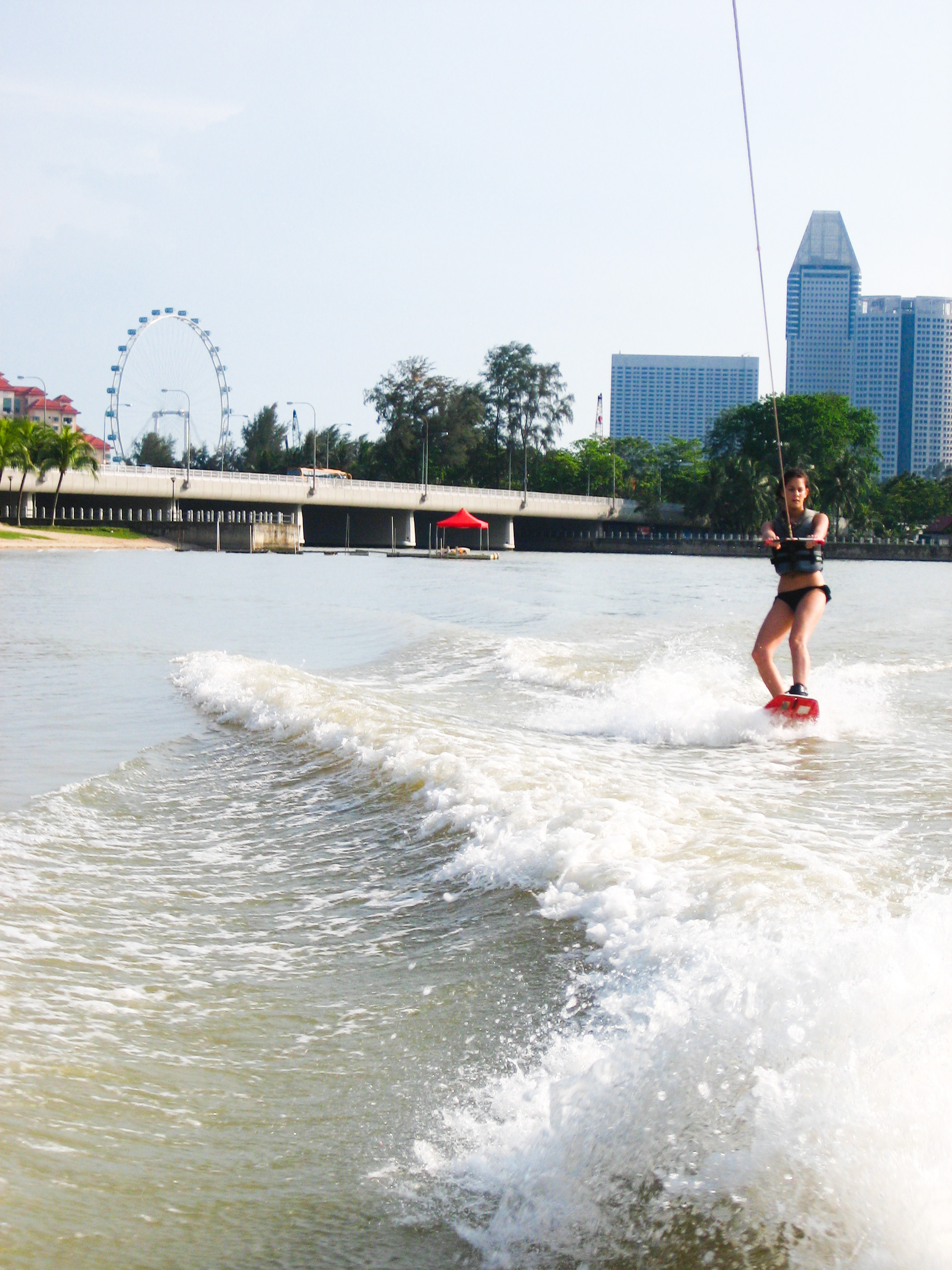
Traditional wakeboarding requires a specialised boat with a tower, a driver, and ideally a spotter. That setup costs thousands of dollars per outing and limits the sport to those with access to a boat and suitable water. Cable wakeboarding changed the equation entirely. An overhead cable system pulls riders around a course, eliminating the need for a boat and dramatically reducing costs. Singapore adopted cable wakeboarding early, and the island now has dedicated facilities where anyone can try the sport for under SGD 60.
The cable system also has a practical advantage for beginners: the pull angle. A boat pulls a rider from water level, creating a steep initial resistance that many first-timers struggle with. A cable pulls from above, which generates a slightly upward force that helps riders get out of the water more easily. Statistics from cable parks globally suggest that around 80% of first-timers successfully stand up on their first session with cable, compared to roughly 50% with boat towing.

Singapore Cable Parks Compared
Singapore's primary cable wakeboarding venue is located at East Coast Park. The facility operates a System 2.0 full-size cable that runs a roughly rectangular course around a purpose-built lake. Here is how the main options compare:
| Feature | Full-Size Cable | System 2.0 (2-Point) |
|---|---|---|
| Course Length | ~700m loop | ~200m straight |
| Max Riders | 8-10 simultaneously | 1 at a time |
| Speed Range | 24-32 km/h | Adjustable, 15-30 km/h |
| Best For | Intermediate-advanced riders | Beginners, learning tricks |
| Obstacles | Kickers, rails, slider | None typically |
| Price (1 hour) | SGD 45-60 | SGD 30-45 |
The 2-point system is particularly useful for beginners because the operator can adjust cable speed individually and stop the system instantly if a rider is struggling. On the full-size cable, the loop runs continuously, and riders must time their starts and release the handle at the correct point to exit.
Your First Session: What Actually Happens
Booking a beginner session at a Singapore cable park typically includes 30 minutes of dry-land instruction followed by water time. Here is the standard progression:
- Gear fitting (10 min): You receive a wakeboard (sized to your weight), bindings, a life jacket and a helmet. Staff adjust the bindings so your feet sit shoulder-width apart with a slight duck stance (toes pointing outward).
- Land simulation (15 min): The instructor demonstrates the starting position: sitting in water, knees bent to chest, arms straight, board perpendicular to the cable direction. You practise this position on a balance board or mat.
- Water start (repeated): You enter the water, assume the starting position, and the cable engages. The key instruction is "let the cable pull you up, do not pull yourself up." Most beginners instinctively try to stand immediately, which causes the board to slip out. Instead, maintain the crouched position and gradually straighten your legs as speed builds.
- Riding: Once standing, weight should be 60% on the back foot and 40% on the front foot. Look in the direction of travel, not down at the board. Keep your knees soft and hips forward.
The Most Common Beginner Mistake
Pulling the handle toward your body during the water start. This feels instinctive but creates a forward lean that face-plants you into the water. Instead, keep your arms completely straight and locked, elbows extended, and let the cable do the work. Think of your arms as ropes, not muscles.
Equipment Breakdown
For your first several sessions, the cable park provides everything. Once you decide to continue, buying your own gear improves comfort and performance. Here is what to consider:
Wakeboard
Cable-specific boards differ from boat boards. Cable boards have a stiffer flex pattern and often feature a grind base (similar to a snowboard) for hitting rails and sliders. Length is selected by body weight: riders under 65 kg typically use a 134-138 cm board; 65-80 kg riders use 138-142 cm; above 80 kg goes to 142-146 cm. Expect to pay SGD 500-900 for a mid-range cable wakeboard from brands like Ronix, Liquid Force or Slingshot.
Bindings
Open-toe bindings accommodate different foot sizes and are the standard choice for most recreational riders. Closed-toe bindings offer more control and are preferred by advanced riders working on inverted tricks. Quality bindings run SGD 300-600. Buy them with your board to ensure compatibility.
Helmet
Mandatory at all Singapore cable parks. Water sport helmets differ from cycling helmets: they are designed to handle repeated water impacts and drain quickly. CE-certified wakeboard helmets cost SGD 60-120. The cable park will lend you one, but hygiene and fit are both better with your own.
Impact Vest vs Life Jacket
An impact vest absorbs the sting of falls at speed but is not rated as a flotation device. A life jacket provides buoyancy but is bulkier. Singapore cable parks require either one, with most experienced riders preferring impact vests for freedom of movement. For open-water boat wakeboarding, a life jacket is the safer choice.
Progressing Beyond Beginner
The typical progression timeline for a Singapore cable park rider looks like this:
- Sessions 1-3: Consistent water starts, riding one full lap without falling, comfortable with speed changes.
- Sessions 4-8: Heel-side and toe-side edging, crossing the wake, riding switch (non-dominant foot forward).
- Sessions 9-15: First ollies (jumping off the water surface), attempting small kickers, basic surface 180s.
- Sessions 15-30: Hitting obstacles (rail slides, kicker jumps), consistent 180 rotations, beginning to link tricks.
- Sessions 30+: 360 rotations, rail transfers, inverted attempts with proper coaching.
Most cable parks offer coaching packages that accelerate this progression. One-on-one coaching sessions in Singapore run SGD 80-120 per hour and are particularly effective for the transition from "riding comfortably" to "hitting obstacles confidently."
Physical Preparation
Wakeboarding demands more upper body endurance than kayaking or SUP. The cable pulls you continuously, and maintaining grip on the handle while riding and turning creates fatigue in the forearms, shoulders and core. Before your first session, basic grip strength and core stability exercises help significantly:
- Dead hangs from a pull-up bar (3 sets of 30-45 seconds)
- Planks (front and side, 3 sets of 45-60 seconds)
- Squats and lunges for leg endurance during the crouched riding position
- Forearm curls with light dumbbells to build grip endurance
More Water Sports to Try
If you enjoy the standing position of wakeboarding, SUP paddleboarding offers a calmer way to be on the water with the same balance demands. For a seated alternative with beautiful scenery, check our kayaking guide covering routes from beginner to advanced across Singapore.